09 July 2012
A new copy of a 1507 Waldseemüller "America" map
A new version of the small globe gores by Martin Waldseemüller and Matthias Ringmann from 1507, which gave the name "America" to the South American continent, was recently discovered in Munich.
For more on this see this article from the The Chronicle of Higher Education: "An American Treasure Turns Up at Ludwig Maximilian U. of Munich"
Click here for more on Waldseemüller and his maps
25 June 2012
Tentative schedule for the SHD Annual Meeting–Pasadena, California September 28-30, 2012
SHD Annual Meeting – Pasadena, California
September 28th – 30th, 2012
FRIDAY
- Breakfast on your own at Hilton.
- Registration: Remaining packets will be taken from the hotel to Friends Hall for distribution.
- Coffee, teas, and breakfast pastries will be available from 8:30-12:00, Friends Hall
Session I (9:10-10:20): PACIFIC – THE EXPEDITIONS
- Pflederer, Richard - Magellan, the Pacific Ocean and the Search for the Anti-Meridian
- Harreld, Donald - Strategies and Identities: Dutch Expeditions through the Strait of Magellan, 1598-1618
Session II (10:35-11:45) : PACIFIC – THE CREWS
- Flannery, Kristie - “Everyone a mutineer”: the crisis of maritime labour in Spanish voyages of discovery and conquest in the Pacific, 1564-1566
- Delaney, John - Endeavour in Australia: Crewing with Cook
Session III (13:00-14:10): LATIN AMERICA
- Brunelle, Gayle - The Assassination of the Sieur de Royville and the Debacle of the Compagnie de l’Amerique Equinoxiale, 1653-1656
- Mullan, Anthony - The Comisión Corográfia and Colombia’s Quest for Identity
Session IV (14:10-15:20: NORTH AMERICA
- Buisseret, David - The Influence of Marquette and Jolliet on the Mapping of North America
- Olcelli, Laura - The Denied Search for the North-West Passage: Alessandro Malaspina at the Service of “the nation that has taken me as one of its own!”
Coffee/Tea Break
Session V (15:40-16:50): TRANSATLANTIC CONTACTS
- Francaviglia, Richard - Discovery and Faith: Re-examining Claims about Pre-Columbian Muslims in America
- Herbert, Francis - The Hakluyt Society’s publications and the Americas: maps and membership from the 1840s
Annual SHD Business Meeting 17:00-17:45
Reception 18:30-19:30 (at the Pasadena Hilton, site of the Annual Dinner)
Annual Dinner and Presentation on SHD 2013 in Tampa, FL
Keynote Address
Dr. Peter C. Mancall, University of Southern California Professor, Director of the USC-Huntington Early Modern Studies Institute, and author of five books including Fatal Journey: The Final Expedition of Henry Hudson, and Hakluyt's Promise.
SATURDAY
- Coffee, teas, and breakfast pastries will be available from 8:30-12:00, Friends Hall
Sessions VI & VII (9:00-10:45): FROM CALIFORNIA TO THE GULF OF MEXICO
- Altic, Mirela - Missionary Cartography of Tarahumara
- Ortiz, Ann - Epistolar Representation of Fray Junípero Serra in Francisco de Palóu’s Relacion Historica de la Vida y Apostolicas Tareas del Venerable Padre Fray Junipero Serra (1787)
- Dellinger, Justin (Winner of Essay Competition) - La Balise: A Transimperial Focal Point
Coffee/Tea Break
Session VIII (11:00-12:10): AFRICA
- Van Duzer, Chet - On Second Thought: Cartographic Corrections to the Shape of Africa on Medieval and Renaissance Maps
- Hogarth, Donald - Robert Rich Sharp (1881-1958): prospector, engineer, and discoverer of the Shinkolobwe, Katanga, (Congo) radium-uranium ore-body
Closing Remarks by Ron Fritze and Bill Warren
22 June 2012
2012 SHD Essay Prize Winner
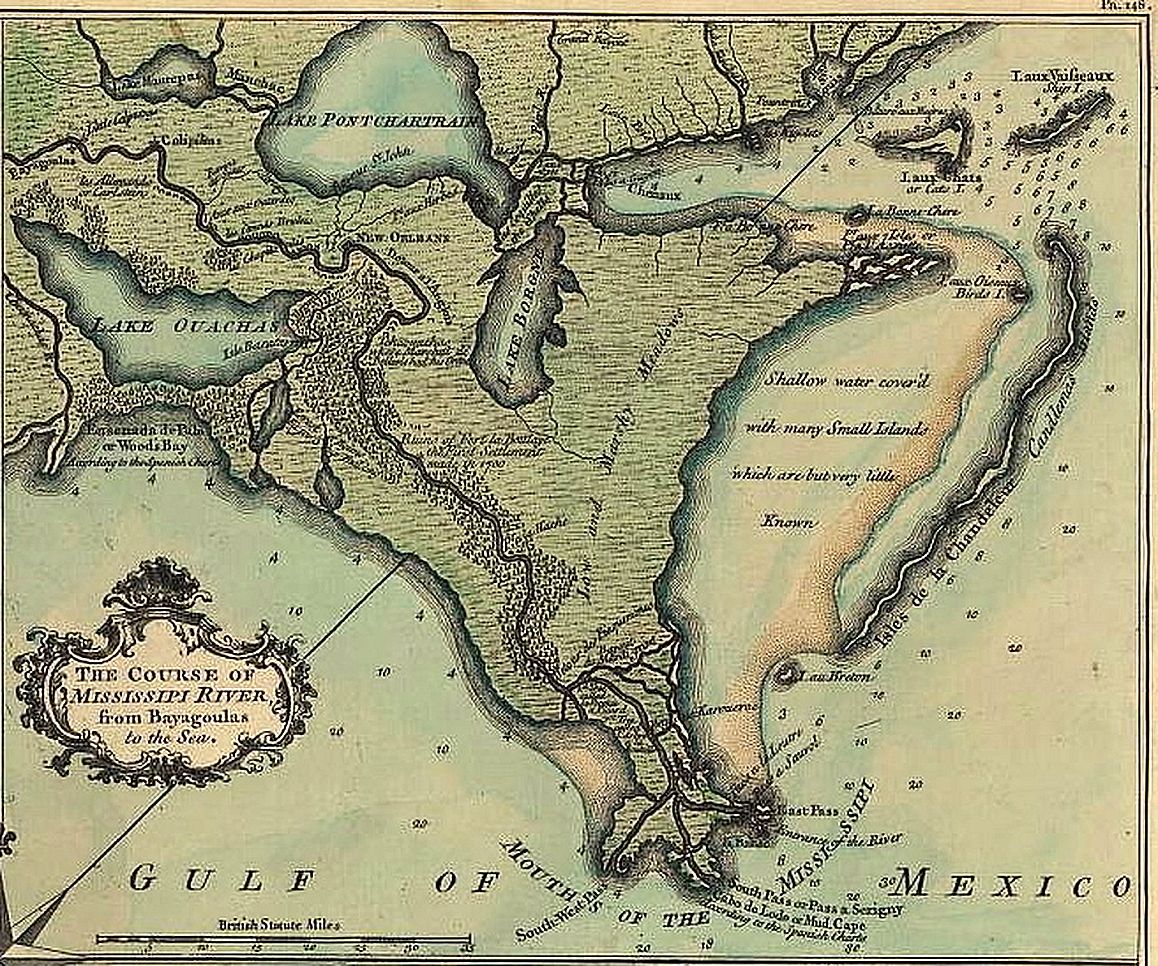
The Course of the Mississipi River, 1759
Abstract: "La Balise: A Transimperial Focal Point"
From the late seventeenth through the early nineteenth century, the mouth of the Mississippi River became a place of imperial competition. The British, French, and Spanish all sought to control this outlet, which effectively served as the gateway to the heart of North America. Initially, Europeans had little understanding of what encompassed the entire Mississippi River Valley, but they did understand the importance of controlling major river systems for political, economic, and military reasons. Economically, controlling the Mississippi River would mean that any major trade in the larger region would funnel down to its mouth. As the French established control of this region, what they would call La Louisiane, they constructed a post called la Balise to serve as both an access point and a buffer for inter-imperial contact. Balise means seamark or beacon in French, so its name is very appropriate since it became such an important focal point. Although its original significance was political, economic, and military for French policy makers, the Balize later took on a larger meaning for the mouth of the Mississippi River.
This settlement is understudied and more work needs to take place researching this frontier within a frontier. It never had a large population, it proved difficult to fortify, and it constantly faced obliteration from hurricanes, yet the Balize became a well-known, recognized location. Seventeenth- through nineteenth-century maps provide an important visual representation of this phenomenon. As this period progressed, maps illustrated the shift from the use of terms such as “embouchure”, “boca”, and “mouth” to “Balise”, "Baliza”, and “Balize”. Larger scale maps depicting continental North America, the Gulf of Mexico, and the Caribbean also evince how the Balize flanks and complements New Orleans as the distinct names along the Gulf Coast. Both points illustrate the transimperial understanding of the role of the Balize as toponym for the mouth of the Mississippi River.
Biographical information
Justin T. Dellinger is a second-year doctoral student at the University of Texas at Arlington. He received his Bachelor’s Degrees in History and Spanish from the University of Texas at Austin in 2004. After teaching for a few years, he returned to school and earned his Master’s Degree in History at the University of Texas at Arlington in 2010. His primary area of study is eighteenth-century Louisiana, employing transatlantic and cartographic approaches in his research.
More on the annual meeting can be found here
23 May 2012
List of Speakers
Pasadena/San Marino, California, September 27-30, 2012
(As of 23 May 2012)
The Assassination of the Sieur de Royville and the Debacle of the Compagnie de l’Amerique Equinoxiale, 1653-1656
The Influence of Marquette and Jolliet on the Mapping of North America
Delaney, John
Endeavour in Australia: Crewing with Cook
Flannery, Kristie (Graduate Student)
and conquest in the Pacific, 1564-1566
Discovery and Faith: Re-examining Claims about Pre-Columbian Muslims in America
Strategies and Identities: Dutch Expeditions through the Strait of Magellan, 1598-1618
Herbert, Francis
Hogarth, Donald
Robert Rich Sharp (1881-1958): prospector, engineer and discoverer of the Shinkolobwe, Katanga, (Congo) radium-uranium ore-body
The Denied Search for the North-West Passage: Alessandro Malaspina at the Service of “the nation that has taken me as one of its own!”
Ortiz, Ann
Epistolar Representation of Fray Junípero Serra in Francisco de Palóu’s Relacion Historica de la Vida y Apostolicas Tareas del Venerable Padre Fray Junipero Serra (1787)
Magellan, the Pacific Ocean and the Search for the Anti-Meridian
On Second Thought: Cartographic Corrections to the Shape of Africa on Medieval and Renaissance Maps
Preliminary meeting details can be found here
18 May 2012
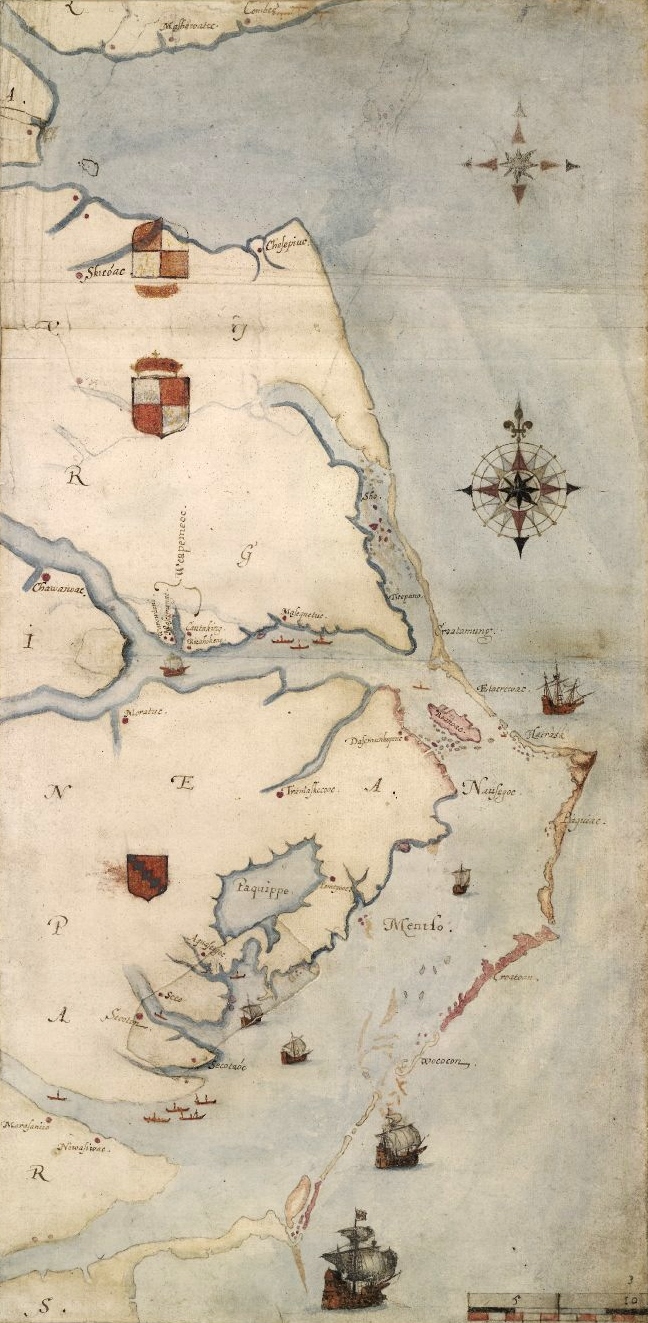
Sixteenth-century map by explorer and artist John White yields a new clue in the Roanoke mystery
| Detail from La Virginea Pars by John White |
- For more information, see "Hidden Images Revealed on Elizabethan Map of America" from the First Colony Foundation.
- For a detailed report on the finding, see "Examination of patches on a map of the east coast of North America by John White," a report (in PDF format) from the British Museum.
- For more information, see "Researchers say they have new clue to Lost Colony" from Yahoo! News.
03 May 2012
SHD Annual Meeting 2012 - Huntington Library/Pasadena, California, 27-30 September 2012
The conference hotel is the Pasadena Hilton
27 September, opening reception will likely be held at the Pasadena Women’s City Club which is a five block walk from the hotel. It is expected to take place from 6:30-7:30 and consist of wines, soft drinks, and light munchies.
28 September, first day of meetings. Hired bus will take people to the Huntington. Conference banquet will be held at the Pasadena Hilton, with reception 6:30-7:30, then meal and keynote address to follow.
29 September, second day of meetings. After the end of the conference, members can tour the grounds and collection of the Huntington. SHD member Bill Warren is hoping to organize a tour of the Huntington Conservation Lab.
30 September, post-conference excursion. Tentatively the organizers would like to take members on a bus trip to the Getty Museum of Art and the Page Museum at the LeBrea Tarpits. Both these stops should make for a full day.
Click here for the Call for Papers
The conference hotel is the Pasadena Hilton
27 September, opening reception will likely be held at the Pasadena Women’s City Club which is a five block walk from the hotel. It is expected to take place from 6:30-7:30 and consist of wines, soft drinks, and light munchies.
28 September, first day of meetings. Hired bus will take people to the Huntington. Conference banquet will be held at the Pasadena Hilton, with reception 6:30-7:30, then meal and keynote address to follow.
29 September, second day of meetings. After the end of the conference, members can tour the grounds and collection of the Huntington. SHD member Bill Warren is hoping to organize a tour of the Huntington Conservation Lab.
30 September, post-conference excursion. Tentatively the organizers would like to take members on a bus trip to the Getty Museum of Art and the Page Museum at the LeBrea Tarpits. Both these stops should make for a full day.
Louis De Vorsey (1929-2012)
It is with great sadness again that we must announce the passing of Louis De Vorsey (1929-2012) this past Sunday, April 29. De Vosey was a great scholar, past Vice President and President of SHD, and a good friend to the organization. De Vorsey is survived by numerous family members and friends and will be greatly missed.
Click here for more on Louis De Vorsey from SHD.
Click here for his obituary.
Subscribe to:
Posts (Atom)