05 March 2018

Call for Papers, 2018 Annual Meeting!!!


2018 Annual Meeting of the Society for the History of Discoveries

Where: Golden, Colorado

When:  20-22 September 2018 with tour on 23 September

Venue: Colorado School of Mines

Our 2018 Annual Meeting will be provided in partnership with the Rocky Mountain Map Society and it will also offer a pre-conference that will be free to SHD members. The RMMS pre-conference, Golden Quest: Mapping the Stampedes, will take place on Thursday, before the traditional opening reception of the SHD conference that evening, followed by SHD’s program on Friday and Saturday. The Exhibition of the Colorado Gold Rush History, a world-famous collection of rocks as well as maps of the West will be exhibited in the Geology Museum.

Following the conference, on Sunday September 23rd, will be a guided tour of original gold-rush towns in the mountains near Golden, a ride on the famous Georgetown Loop steam engine train, an expert tour of an underground gold mine, and then a tour of impressive dinosaur and geological wonders nearby.

Theme: Great Mountains of the American West

The Gold Rush in the American West sparked interest in the vast mountain area situated between the continent’s interior and the West Coast. The development of an overland route that connected the continental part of the country with the Pacific coastline spurred the exploration and mapping of the Rocky Mountains as never before. Fur traders, gold miners, soldiers, colonists, and adventurers became explorers and mapmakers of the great mountains of the American West.

Papers, 20 minutes in length, are invited on all aspects of this theme, from exploration and the reconnaissance of the mountains, mining activities, survival conditions, trail supplies, the family life of the pioneers, as well as any other social and economic aspect relating to the colonization and exploitation of this mountainous area.

The Committee also welcomes proposals from SHD members, scholars, and independent researchers that address all aspects of geographical discovery and exploration. Preference will be given to those papers that are particularly aligned with the conference theme, but all paper proposals of high quality, regardless of geographic orientation, will be considered.
The audience at SHD meetings is diverse and includes academics and members of various professions. All are especially interested in the processes and consequences of geographical exploration and discovery. Presenters are encouraged to use images (maps, paintings, photographs, etc.). For the benefit of the audience all visuals have to be presented as PowerPoint-compatible projections.
Paper proposals are due March 15, 2018. Please provide a proposal that includes the following components:

·         the title of the presentation
·         the author’s name and address, including email address and affiliation
·         an abstract summarizing the paper’s scope and conclusions (maximum of 500 words)
·         a statement about the originality of the contents of the paper: how much is new, unpublished material, based on research in primary sources, etc.
·         a statement indicating whether PowerPoint or other digital media will be used and whether internet access is necessary for the presentation
·         a brief biographic sketch of the author(s)
SHD welcomes submissions from graduate students and emerging scholars.

Paper proposals should be submitted as e-mail attachments, with the subject line SHD 2018, to:

Dr. Mirela Altić, Program Committee Chair, mirela.altic@gmail.com

Questions?  Please contact Dr. Altić at mirela.altic@gmail.com


24 December 2016

Call for Papers: 2017 Annual Meeting


Call for Papers
2017 Annual Meeting of the Society for the History of Discoveries

Where: Milwaukee, Wisconsin, USA
When: 22-23 September 2017 with possible outings on 21 and 24 September

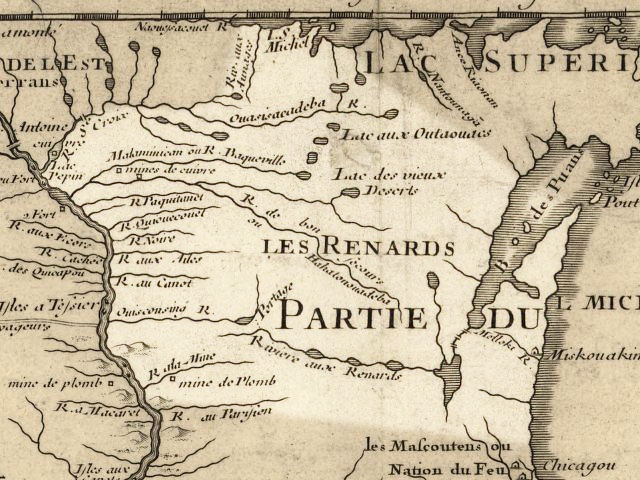
The approximate outline of Wisconsin on
Carte de la Louisiane et du cours du Mississipi
(1718) by Guillaume de L'Isle.

Theme: From the Midwest to the Arctic: Exploration and its Impact in the Northland


Papers, 20 minutes in length, are invited on all aspects of this theme, from explorers to fur
traders to cartography. Jesuit missionaries played a key role in exploring and mapping this
region and Marquette University, a Jesuit institution, will host select conference events. The
American Geographical Society Library at the University of Wisconsin will be our primary host
and in their honor we also encourage papers on arctic exploration, as well as papers on the
history of cartography generally.

The Program Committee welcomes proposals from SHD members, scholars, and independent
researchers that address all aspects of geographical discovery and exploration. Preference will
be given to those papers that are particularly aligned with the themes noted above, but all paper
proposals of high quality, regardless of geographic orientation, will be considered.

The audience at SHD meetings is diverse and includes academics and members of various
professions. All are especially interested in the processes and consequences of geographical
exploration and discovery. Presenters are encouraged to use images (maps, paintings,
photographs, etc.). For the benefit of the audience all visuals must be presented as PowerPoint
compatible projections.

Paper Proposals are Due Friday, February 3, 2017:
  • the title of the presentation
  • the author’s name and address, including email address and affiliation
  • an abstract summarizing the paper’s scope and conclusions (maximum of 500 words)
  • a statement about the originality of the contents of the paper: how much is new,
  • unpublished material, based on research in primary sources, etc.
  • a statement indicating whether power point or other digital media will be used and
  • whether internet access is necessary for the presentation.
  • a brief biographic sketch of the author(s)
SHD welcomes submissions from graduate students and emerging scholars.

Paper proposals should be submitted as e-mail attachments, with the subject line SHD 2017, to:

Dr. Marguerite Ragnow, Program Committee Chair
ragn0001@umn.edu

Questions? Please contact Dr. Ragnow at ragn0001@umn.edu or 612-624-6895

24 July 2016

57th Annual Meeting: Registration Information

 57th Annual Meeting of the Society for the History of Discoveries

September 22 (Thursday) – September 24 (Saturday), 2016
Newport, Rhode Island


The conference hotel is the Viking Hotel in downtown Newport, RI, just a few short blocks from the waterfront.

Link here for hotel reservations at the discounted SHD rate.

Conference registration is now open!

  • $250.00 per person ($225.00 per person if you register by August 29, 2016)
  • $200.00 Companion registration
  • $175.00 Graduate Student

The fee for the excursion (lunch and harbor tour on Saturday afternoon) is $40.00.  Please be sure to include this in your payment and note it in the registration information -- this is limited to the first 20 people.

Please register via Paypal, following the instructions below:

1. Go to the Internet URL https://www.PayPal.com  
2. Click on "Send Money"
3. Sign up for FREE personal Account if you do not already have one. If you live in the USA, use U.S. Account Registration. If not residing in the USA, click on “International Account Registration.”
Enter NO for Premier Account.
4. Under "Recipient's E-mail" enter brandebo@hotmail.com
5. Under "Amount" enter the amount you want charged to your
credit card.
6. Under 'Type" enter 'service.'
7. Under "Email Subject*" enter "2016 Conference Registration-your last name" (enter YOUR last name, not "your last name")
8. Under "Note*" enter the names of conference registrants, any dietary restrictions (this is important!), and your contact information (address, phone, e-mail).  If you are also registering for the excursion, please indicate this and the # in your party.

If you have any questions about this procedure, contact the Treasurer at E-mail: brandebo@hotmail.com

13 July 2016

57th Annual Meeting of the Society for the History of Discoveries


57th Annual Meeting of the Society for the History of Discoveries

September 22 (Thursday) – September 24 (Saturday), 2016
Newport, Rhode Island

The conference hotel is the Viking Hotel in downtown Newport, RI, just a few short blocks from the waterfront.
Link here for hotel reservations at the discounted SHD rate. 


Preliminary Program

(All events take place at the Viking Hotel unless otherwise noted)
  
Thursday, September 22

1:00 p.m. – 3:00 p.m.              Council Meeting
7:00 p.m. – 10:00 p.m.            Opening Reception/Registration

Friday, September 23

7:30 a.m. – 8:30 a.m.               Breakfast/Registration

8:30 a.m. – 8:45 a.m.               Welcome:  SHD President:  James Matthews

8:45 am. –10:15 a.m.               SESSION 1
·         Chet Van Duzer, “The Cartographer Sets Sail: Eyewitness Records and Early Modern Maps”
·         James Walker, “Chart of the Northwest Coast of America: An Unrecorded Legacy of the 1790-1793 Voyage of the Columbia Rediviva and A Record of Earliest Encounters”
·         Richard Vondrak, “Amundsen's Difficult Search for the Elusive North Magnetic Pole”

10:15 a.m. – 10:30 a.m.           Break/Registration

10:30 a.m. – 12:00 p.m.          SESSION 2
·         Thomas J. Rushford, “Jean Ribault: Huguenot Explorer in the Atlantic World”
·         Lauren Beck, “Extramarital Explorations in the Early Spanish Atlantic”
·         Simon Sun, “Your Affectionate Son: Family Letters of Samuel Shaw”

12:00 p.m. – 1:30 p.m.            Lunch

1:30 p.m. – 3:00 p.m.              SESSION 3
·         Mirela Altić, “Jesuits at Sea:  Jose Quiroga and Jose Cardiel—Two Different Views of Patagonia 1745-1746”
·         Anne Good, “Curious Tastes:  Experimental Eating on Ship and on Land”
·         Thomas J. Anderson, “The Desert Mariner: Understanding the Global Experiences of F. G. Lyon in the Sahara and Artic”

3:30 p.m. – 4:00 p.m.              Break

4:00 p.m. – 5:30 p.m.              SESSION 4
·         Charles Sullivan, “From Sea to Shining Sea: Measuring North America in the 16th Century”
·         Lydia Towns, “To Regulate or Not to Regulate: the Seven Years' War and William Pitt's Attempt to Control British Privateers”
·         Janet Rith-Najarian, “Captain Grace O’Malley and the Irish Seas: Piracy, Rebellion, and Cartographic Espionage in the Elizabethan Era”

6:00 p.m. – 9:30 p.m.              RECEPTION, ANNUAL DINNER
Keynote Address by D. K. Abbass:
"How So Many of James Cook's Ships got to Rhode Island without the Great Navigator: The After-Glow of Discovery"


Saturday, September 24

7:30 a.m. – 8:30 a.m.               Breakfast

8:30 a.m. – 9:45 a.m.               SESSION 5:  Connections:  Captain Cook and Rhode Island
·         Stephen Baines, “Rhode Island and Yorkshire:  Colonial Rhode Island's Religious Tolerance and the Quaker Connections to Maritime Trade”
·         Kerry Lynch, “The Search for the Lord Sandwich ex Endeavour:  The 2016 Update on RIMAP's Archaeological Progress”
·         Nigel Erskine, "What Finding the Endeavour Means to the Modern World: 150th Anniversary Plans in England, Australia, and (by the way) the Media”

9:45 a.m. – 10:15 a.m.             Annual Business Meeting

10:15 a.m. – 10:30 a.m.           Break

10:30 a.m. – 12:00 p.m.          SESSION 6
·         Felipe Fernandes Cruz, 2015 SHD Student Prize Winner, “Napalm Colonization: Indigenous Peoples and Exploration in Brazil’s Aeronautical Frontiers”
·         Anthony Mullan, “Agustin Codazzi and Nation Building in Nineteenth Century Venezuela”
·         Frances L. Pollitt, “Charting Casco Bay: Lemuel Moody’s signature (and unrecognized) contribution towards saving mariners’ lives in and around Portland Harbor, Maine, 1825”


Optional Outing

12:30 p.m. – 2:00 p.m.            Picnic Lunch and Harbor Tour (Separate Advance Registration required; location/time is tentative and subject to change)

4:00 p.m. – 5:30 p.m.               Special Tour: Redwood Library

There are many things to do and see in Newport, many of them within walking distance of the Viking Hotel.  We encourage you to visit the DiscoverNewport website to plan additional activities during your visit. 

Registration Information

Conference registration is now open!
  • $250.00 per person ($225.00 per person if you register by August 10, 2016)
  • $200.00 Companion registration
  • $175.00 Graduate Student
The fee for the excursion (lunch and harbor tour on Saturday afternoon) is $40.00.  Please be sure to include this in your payment and note it in the registration information -- this is limited to the first 20 people.

Please register via Paypal, following the instructions below:

1. Go to the Internet URL https://www.PayPal.com  
2. Click on "Send Money"
3. Sign up for FREE personal Account if you do not already have one. If you live in the USA, use U.S. Account Registration. If not residing in the USA, click on “International Account Registration.”
Enter NO for Premier Account.
4. Under "Recipient's E-mail" enter brandebo@hotmail.com
5. Under "Amount" enter the amount you want charged to your
credit card.
6. Under 'Type" enter 'service.'
7. Under "Email Subject*" enter "2016 Conference Registration-your last name" (enter YOUR last name, not "your last name")
8. Under "Note*" enter the names of conference registrants, any dietary restrictions (this is important!), and your contact information (address, phone, e-mail).  If you are also registering for the excursion, please indicate this and the # in your party.


If you have any questions about this procedure, contact the Treasurer at E-mail: brandebo@hotmail.com

26 January 2016

Call for Papers: 2016 Annual Meeting


Call for Papers
2016 Annual Meeting of the Society for the History of Discoveries


Where: Newport, Rhode Island
When: 22-24 September 2016 with possible tour on 25 September

Theme: The Mariner's Life: At Home, Abroad, and At Sea

Papers, 20 minutes in length, are invited on all aspects of this theme, from navigation to piracy, from sailor's wives to shipwrecks, from slavery to food, shipboard entertainment, and the law of the sea. A featured part of the conference will be the Rhode Island Marine Archaeology Project and its work locating British ships, including Cook's bark Endeavour, lost off the Rhode Island coast during the Revolutionary War.

The Program Committee welcomes proposals from SHD members, scholars, and independent researchers that address all aspects of geographical discovery and exploration. Preference will be given to those papers that are particularly aligned with the conference theme, but all paper proposals of high quality, regardless of geographic orientation, will be considered.

The audience at SHD meetings is diverse and includes academics and members of various professions. All are especially interested in the processes and consequences of geographical exploration and discovery. Presenters are encouraged to use images (maps, paintings, photographs, etc.). For the benefit of the audience all visuals have to be presented as PowerPoint compatible projections.

Paper Proposals are Due February 15, 2016
  • the title of the presentation 
  • the author’s name and address, including email address and affiliation 
  • an abstract summarizing the paper’s scope and conclusions (maximum of 500 words) 
  • a statement about the originality of the contents of the paper: how much is new, unpublished material, based on research in primary sources, etc. 
  • a statement indicating whether power point or other digital media will be used and whether internet access is necessary for the presentation. 
  • a brief biographic sketch of the author(s) 
SHD welcomes submissions from graduate students and emerging scholars. 

Paper proposals should be submitted as e-mail attachments, with the subject line SHD 2016, to:

Dr. Marguerite Ragnow, Program Committee Chair
ragn0001@umn.edu

Questions? Please contact Dr. Ragnow at ragn0001@umn.edu or 612-624-6895

27 April 2015

Latest issue of Terrae Incognitae


The latest issue of Terrae Incognitae, the journal of the Society for the History of Discoveries, is now online!

The contents of this issue are as follows:

Enjoy!

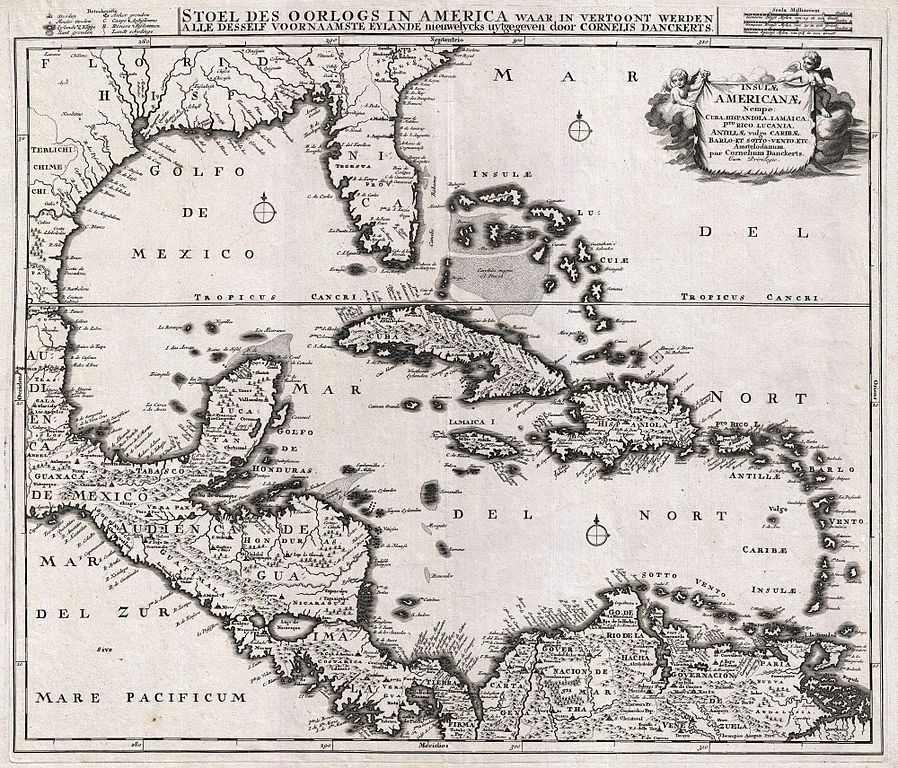
Insulae Americanae by Cornelius Danckerts, 1696

17 October 2014

SHD Members talk about Mapping the U.S.

The "Great American Desert" notation of the
Great Plains from Maj. Stephen Long's expedition.
North Texas PBS station KERA offers an audio interview of three map scholars and SHD members: University of Texas at Arlington (UTA) special collections curator Ben Huseman; Texas Map Society president Gerald Saxon; and Imre Dembardt, Professor of Cartographic History at UTA. Part of their radio series Think with host Krys Boyd, these scholars present a look at how maps relay information about American society as the United States has changed and expanded.

A new issue of the SHD newsletter Terrae Cognita

The latest issue of the SHD newsletter Terrae Cognita has been published here.  You'll find abstracts for the upcoming meeting in Austin, and other member news.  Happy reading!

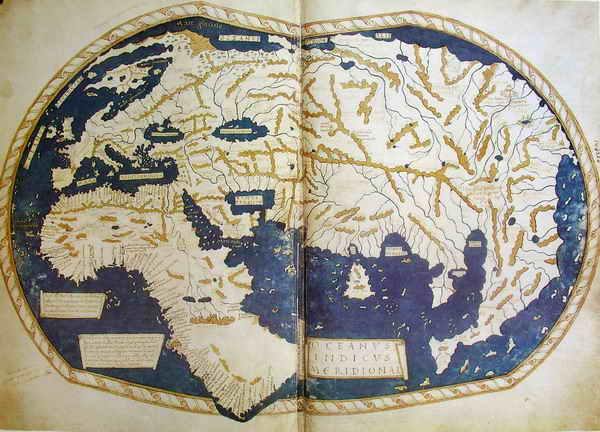
Uncovering Hidden Text on a 500-Year-Old Map That Guided Columbus


World map of Henricus Martellus Germanus from 1489,
currently at the British Library.
"Uncovering Hidden Text on a 500-Year-Old Map That Guided Columbus" by Gregg Miller at Wired

10 September 2014

Franklin's Lost Expedition Found

Man Proposes, God Disposes by Edwin Henry Landseer, 1864.
Source: Wikimedia Commons
Canadian researchers say they have discovered the wreckage of one of the ship's from Captain Sir John Franklin's lost 1845-1846 Arctic expedition, solving one of the major exploration mysteries of the Victorian Era.  Franklin's team was locked in the ice during a doomed expedition searching for a passage through the islands of northern Canada, the famed Northwest Passage.  All of the crew members eventually died.  The remains of the expedition were never found, though numerous search parties were sent out to look for them.  Researchers are not yet sure if they have found the HMS Erebus or the HMS Terror, but they have good views of the wreck under the waters of Victoria Strait, just off King William Island.

11 August 2014

The Ninth Biennial Virginia Garrett Lectures on the History of Cartography

The link below is the announcement and registration brochure for the 2014 Virginia Garrett Lectures on the History of Cartography/Map Fair of the West.

13 July 2014

55th Annual Meeting of the Society for the History of Discoveries

Preliminary information of the 55th Annual Meeting of the Society for the History of Discoveries  to be held 30 October - 2 November 2014 in Austin, Texas is available at: http://www.sochistdisc.org/2014_annual_meeting.htm  

More information will be posted in the coming months.

17 May 2014

The wreck of Columbus's flagship found?

The anchor of the Santa María now rests in the
Musée du Panthéon National Haïtien, in Port-au-Prince, Haiti.
Underwater archaeologist Barry Clifford has recently announced the discovery of what he believes is the Santa María, Christopher Columbus's flagship from his epochal 1492 expedition.  Clifford and his team found the debris from the wreckage off the northern coast of Haiti, near Cap-Haïtien.

The ship was wrecked on Christmas Eve, 1492, and sank the next day, after a cabin boy was allowed to steer because all the other sailors were asleep from the festivities of the day.  Columbus ordered the deck timbers salvaged to create the first European settlement in the Caribbean, named La Navidad ("Christmas").  Archaeological evidence has located La Navidad nearby.

Clifford believes the remains of the Santa María are lodged on a coral reef about ten to fifteen feet below the water's surface.  Photos of the site in 2003 show a lombard canon, which Clifford avers has now been looted from the site.  Clifford says that, "All the geographical, underwater topography and archaeological evidence strongly suggests that this wreck is Columbus' famous flagship, the Santa Maria."

Laurence Bergreen, author of Columbus: The Four Voyages, is more skeptical.  He wonders how much of the ship would remain, given its age, the influence of earthquakes and hurricanes, and that most of the wood from the ship was used for La Navidad (and want was not used for lumber, he believes, would have rotted away).  Bergreen also comments on the lombard canon from 2003 have disappeared: "But now the lombards, if that's what they were, are gone. There's not much left to go on."

Clifford has tried to interest the Haitian government in protecting and excavating the site.  He said, "The Haitian government has been extremely helpful–and we now need to continue working with them to carry out a detailed archaeological excavation of the wreck."  Bergreen agrees that more investigation is needed: "Given its potential historic significance, let's hope this wreck will finally receive the careful and responsible attention it deserves."


15 April 2014

Women, exploration and discovery: Special panel/issue to be published in Terrae Incognitae

Ida Laura Pfeiffer (1797-1858),
an Austrian explorer and author.
Proposals are being sought for a panel dedicated to women explorers, travelers, cartographers, etc., who contributed to or participated in the exploration and discovery of our world, its lands and oceans, at the 2014 annual meeting of the Society for the History of Discoveries (October 30-November 2, 2014, in Austin, Texas).  Peer-reviewed, article-length submissions will be published in a special issue of Terrae Incognitae, vol. 48.1.

Three-hundred-word proposals accompanied by a brief biographical abstract should be received by May 15, 2014, via email to Dr. Lauren Beck (lbeck@mta.ca).  Ideally contributors will both present their research and see it published in the journal, but if this is not possible, please email the editor for further information.

11 April 2014

The Hidden World of Women Cartographers

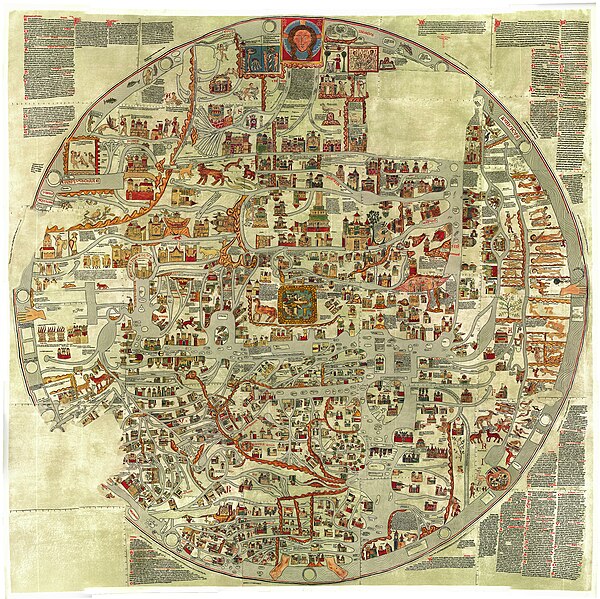
In Map Worlds: A History of Women in Cartography, author Will C. Van Den Hoonaard suggests the thirteenth-century Ebstorf mappa mundi may have been created by the nuns of the Ebstorf abbey. 
Will C. Van Den Hoonaard has written a recently published work that researches the oft-overlooked contribution of women to the history of cartography.  Titled Map Worlds: A History of Women in Cartography, printed by the Wilfrid Laurier University Press, it covers female cartographers, explorers, and geographers from the sixteenth-century till today.  It offers an intriguing take, too, on how gender may be used to interpret maps.

21 February 2014

Marginalia in cARTography

An example of map marginalia, the hard-working Niagara Falls beavers from Herman Moll's
 A New and Exact Map of the Dominions of the King of Great Britain on ye Continent of America (1715).
The Chazen Museum of Art at the University of Wisconsin–Madison is hosting an exhibit entitled "Marginalia in cARTography" from February 28 to May 18, 2014, in the Leslie and Johanna Garfield Gallery.  Marginalia in cARTography focuses on the artistic images that inhabit the edges, margins, and empty spaces on maps from the middle ages to the twentieth century.  These images, says guest curator and art historian Sandra Sáenz-López Pérez, "should be regarded not only as part of the map, but as elements that lead to a better understanding of the region mapped, of the cartographers and their collaborators, of their aesthetic sense, and of the world in which they were made."


30 January 2014

Terra Incognita to Australia

Archipelagus Orientalis, sive Asiaticus by Johannes Blaeu (1659)
The National Library in Canberra is currently exhibiting a large and magnificent collection of some of the world's greatest and rarest maps under the title of "Mapping Our World: Terra Incognita to Australia."  The exhibit hosts treasures such as an eleventh-century Macrobius-style chart, a thirteenth-century Psalter map, and the fifteenth-century Fra Mauro map on the early end of the Age of Discovery, down to maps by explorers Captain James Cook and Matthew Flinders.  The exhibition, which is open until March 10, 2014, was opened in November 2013 by film star Russell Crowe, who exclaimed he was a "map geek."

Maps range from charts made by Australia's Aborigines, to sea charts, to great world maps showing Australia as blank conjectures.  Artifacts include chronometers, bowls from the Dutch East India Company, and mariner’s calipers.  Online extras for "Mapping Our World: Terra Incognita to Australia" include YouTube videos, podcasts, checklists, and interactive maps.

Head of maps at the British Library Peter Barber said: "You wouldn't get this exhibition in Europe because the institutions would never lend."  The National Library’s curator of maps, Martin Woods, gushed, "I don't know how much more excited I could be!"


21 January 2014

Does a kangaroo in 400-year-old manuscript prove the Portuguese discovered Australia?

A kangaroo in a circa 1600 sheet of processional music from Portugal?
If so, it could prove the Portuguese were the first Europeans to reach Australia.
(Source: Les Enluminures Gallery)
An illuminated manuscript recently acquired by the Les Enluminures Gallery in New York which dates to between 1580 and 1620 has a drawing in a capital letter of an animal that looks conceivably like a kangaroo (or wallaby) munching on a plant.  If it is a kangaroo, it may be persuasive evidence that the Portuguese reached Australia before the first accepted European landing there by Dutch navigator Willem Janszoon in 1606.

The manuscript, a sheet of liturgical music, also has a images of half-naked men wearing a chaplet of leaves that could be a depiction of Australian aborigines.

An Australian aboriginie?
(Source: Les Enluminures Gallery)
Laura Light, a researcher at the Les Enluminures Gallery, said that "a kangaroo or wallaby in a manuscript this early is proof that the artist of this manuscript had either been in Australia, or even more interestingly, that travellers' reports and drawings of the interesting animals found in this new world were already available in Portugal."  The theory of the Portuguese discovery of Australia has been around for at least two centuries, but still lacks definitive proof.

Dr. Martin Woods of the National Library of Australia said the kangaroo-like animal could be "another animal in south-east Asia, like any number of deer species."  Dr. Peter Pridmore of La Trobe University suggests that the animal depicted could be an aardvark.

Les Enluminures Gallery plans to display the manuscript, with many others from January 24 to February 21, 2014, in an exhibit entitled "Sacred Song: Chanting the Bible in the Middle Ages and Renaissance."

The debate about the possible European discovery of Australia before 1606 continues.


17 January 2014

The International Society for the History of the Map's Discussion List: New E-Mail Listserv

A large number of individuals miss the old MapHist e-mail listserv. The Society for the History of Discoveries is pleased to pass along the announcement that the International Society for the History of the Map (ISHMap) has opened a new e-mail listserv.  Sign-up information is at: http://lazarus.elte.hu/cgi-bin/mailman/listinfo/ishm

From the (ISHMap) moderators: 

*******
Dear ISHMap-Lister,

Welcome you at our re-opened, free and open discussion list, hosted by the International Society for the History of the Map (ISHMap).  After the short test period the Moderators invite you to contribute to the discussion.

Please, send your messages to the list - and reach the global community of historians of the map.  The list is devoted to international scholarly communication regarding the history of the map.  For more information visit the Society website.

Best wishes for 2014 with ISHMap-List,

Sarah, Thomas and Zsolt
(The Moderators)
*******

For more information:

Mapping Nature Across the Americas at the Newberry Library

Geographie der Pflanzen in den Tropen-Ländern,
Louis Bouquet after Alexander von Humboldt, Schönberger and Turpin (1807).
The following announcement of the 2014 NEH Summer Seminar at the Newberry may be of interest to you (or your students). Please see the link at the bottom of this email for more information.

Here is a short description of the program:

The Newberry Library's Hermon Dunlap Smith Center for the History of Cartography is now accepting applications for its 2014 NEH summer seminar for college and university faculty and up to three graduate students, "Mapping Nature across the Americas." The four-week seminar will be led by James Akerman (Director of the Smith Center) and Kathleen Brosnan (Travis Chair of Modern American History at the University of Oklahoma). Participants will explore the interplay between mapping and environmental knowledge across the Americas from the transatlantic encounter into the 21st century. By bringing together environmental history and the history of cartography, this institute will illuminate their essential relationship, broadening participating summer scholars' understanding of how maps and depictions of nature shaped and were shaped by diverse cultural and historical contexts. Applications are encouraged from college and university faculty teaching a broad range of courses and involved in a diversity of research topics. Qualified independent scholars and scholars engaged in museum work are also eligible to apply. A limited number of spaces are also available for full-time graduate students in the humanities. Successful applicants will receive a stipend of $3900 to help defray travel and housing expenses. Completed applications must be postmarked no later than March 4, 2014.